
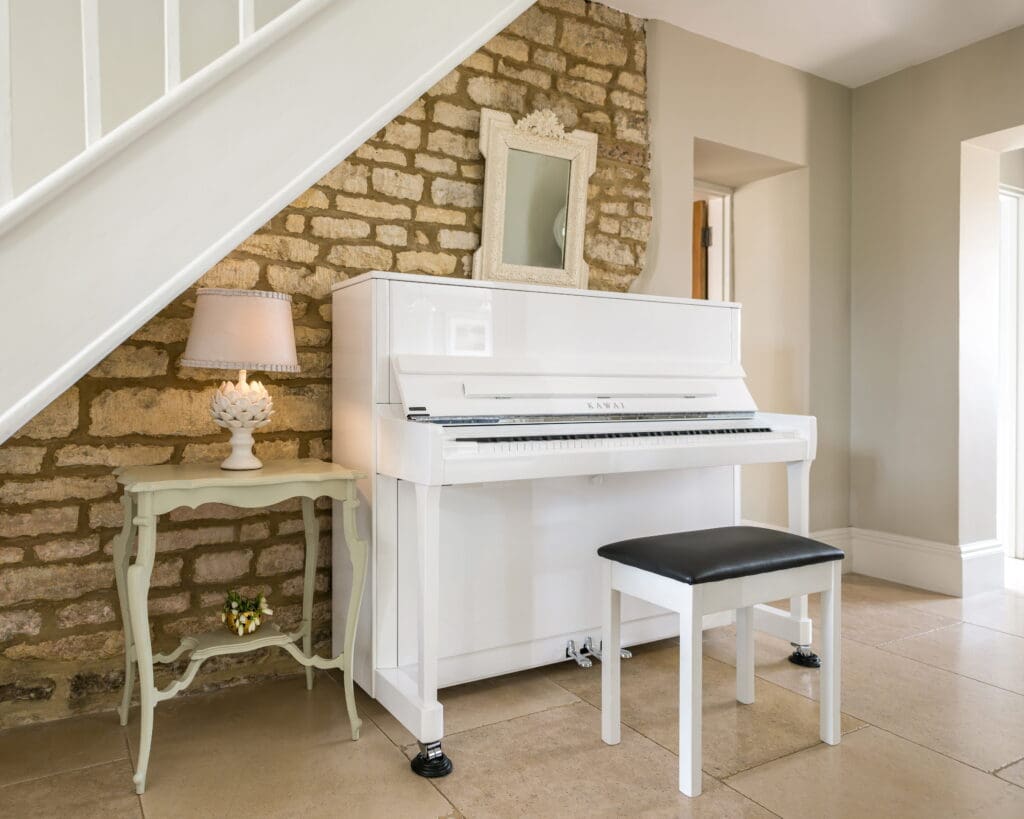
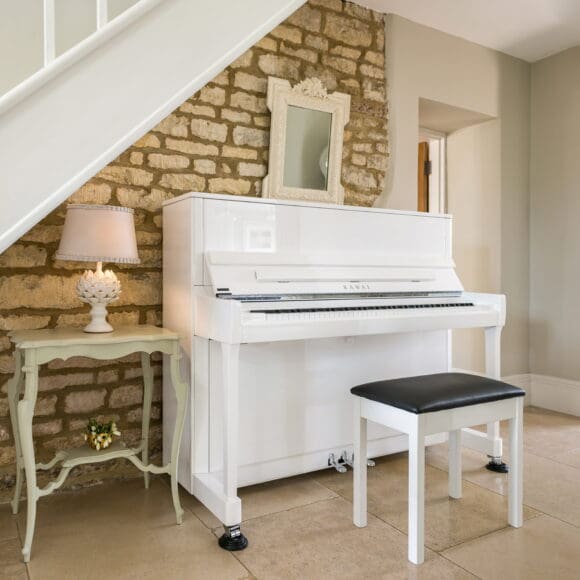
 Kawai K300 upright in polished white with silver fittings.
The Kawai K300 upright piano and the Kawai K500 upright piano are two very popular models of piano for players of all abilities.
Each of the models is very similar, so you might find yourself torn between the two. Both pianos offer a bold and impressive sound, whilst being compact enough to fit in a small space.
There are, however, some subtle differences between the two models that make for a slightly different playing experience. Here, we shall illustrate what the key differences between the two models are to make the process of finding the right Kawai upright piano for you a bit easier!
What are the differences between the K300 vs K500?
| K300 | K500 | |
| Height | 122cm | 130cm |
| Keytops | Acrylic or phenol | NEOTEX |
| Key length | Standard | Longer to provide more leverage |
| Colours | Black, white, black and silver, white and silver | Black, mahogany |
| Sound character | A clear and balanced tone | Richer and more resonant sound |
Size and appearance
The Kawai K500 is slightly larger than the Kawai K300, although the size difference between the two is comparatively small, at around 8cm difference in height. It’s not a massive difference, just something to be noted if you are very tight for space in your home.
The Kawai K300 is available in three colours: black, white, black with silver hardware, and white with silver hardware, whilst the Kawai K500 is currently available in black and mahogany. The Kawai K500 also has a newer design than the previous Kawai K models, with a slightly larger cabinet that allows for longer strings and a larger soundboard. This gives the sound more depth and colour than is possible with the K300.
Keys
The Kawai K500 has a longer key length to give you more leverage, allowing for greater control whilst playing. The K500 also features Kawai’s exclusive NEOTEX keytop surface, which is made entirely of cellulose fibre and is a very smooth and comfortable texture to play.
The NEOTEX surface is also semi-porous and silica-filled, which acts to absorb the hand’s natural oils and perspiration to increase the player’s control. The keys of the K300, on the other hand, are made from either acrylic or phenol, depending on the version that you buy.
 Kawai K500 upright in polished mahogany.
Mechanism
There are a couple of mechanical differences between the Kawai K300 and the Kawai K500, such as the K500‘s duplex scaling in the upper treble to enhance the piano’s tone.
The duplex scaling enhances the harmonics in the treble range, giving the piano a very rich sound. This is not essential, but it does add to the tonal colour of the instrument, so it is perfect for those who want an even wider expressive range.
The Kawai K500 also has mahogany hammer mouldings and an extra-long #1 bass string.
So, what’s the best Kawai Piano for me?
Ultimately, the differences might not be so obvious at first, but the subtle changes made between the two models show how Kawai truly do think of everything with every redesign of their pianos.
Those who are newer to the piano might not notice the differences between the two models; more experienced players, on the other hand, are likely to appreciate the subtle changes that have been made to make the experience of playing that much better.
Where can I buy a Kawai upright piano?
At Richard Lawson Pianos, we are proud to have four decades of experience in the piano industry and are well–equipped to offer any advice you might require to help you find the right piano for your individual needs and playing ability.
For more information about the Kawai K300, K500, or any of the other piano models advertised on our website, please do not hesitate to get in contact with us, and we shall be happy to help.
The K300 is an excellent investment for students, home players, and those with limited space. If you’re a more advanced pianist, the K500 provides more resonant and richer tones with finer control.
You can also enjoy our piano finance services, with our Take It Away scheme offering accessibility to pianists with interest-free loans.
If you’re still unsure as to which Kawai upright piano is best for you, our piano hire service means you can try before you buy. You can rent an instrument and get a feel for it in your space before making a decision. You can also visit our piano showroom to see our upright selection for yourself.










 Reviews